
The San Francisco State University Global Museum recently held its Friends and Family Day, a fun and educational event open to all students and nearby residents. It was a great chance to see the museum’s collection as well as enjoy some snacks, crafts, and chats with the museum personnel and other community members. While everyone was welcome to this gathering, particular attention was paid to the younger demographic. Museums are generally not the most child-friendly of places, even though that is changing in some places. Many history and art museums still retain a sterile, empty room full of items in glass cases with confusing, tiny text placed high on the walls out of a child’s view. Even the Global Museum, with its colorful walls and simplified explanations can be taxing or under-stimulating to a small child, so the event made sure to combat this challenge in two main ways.
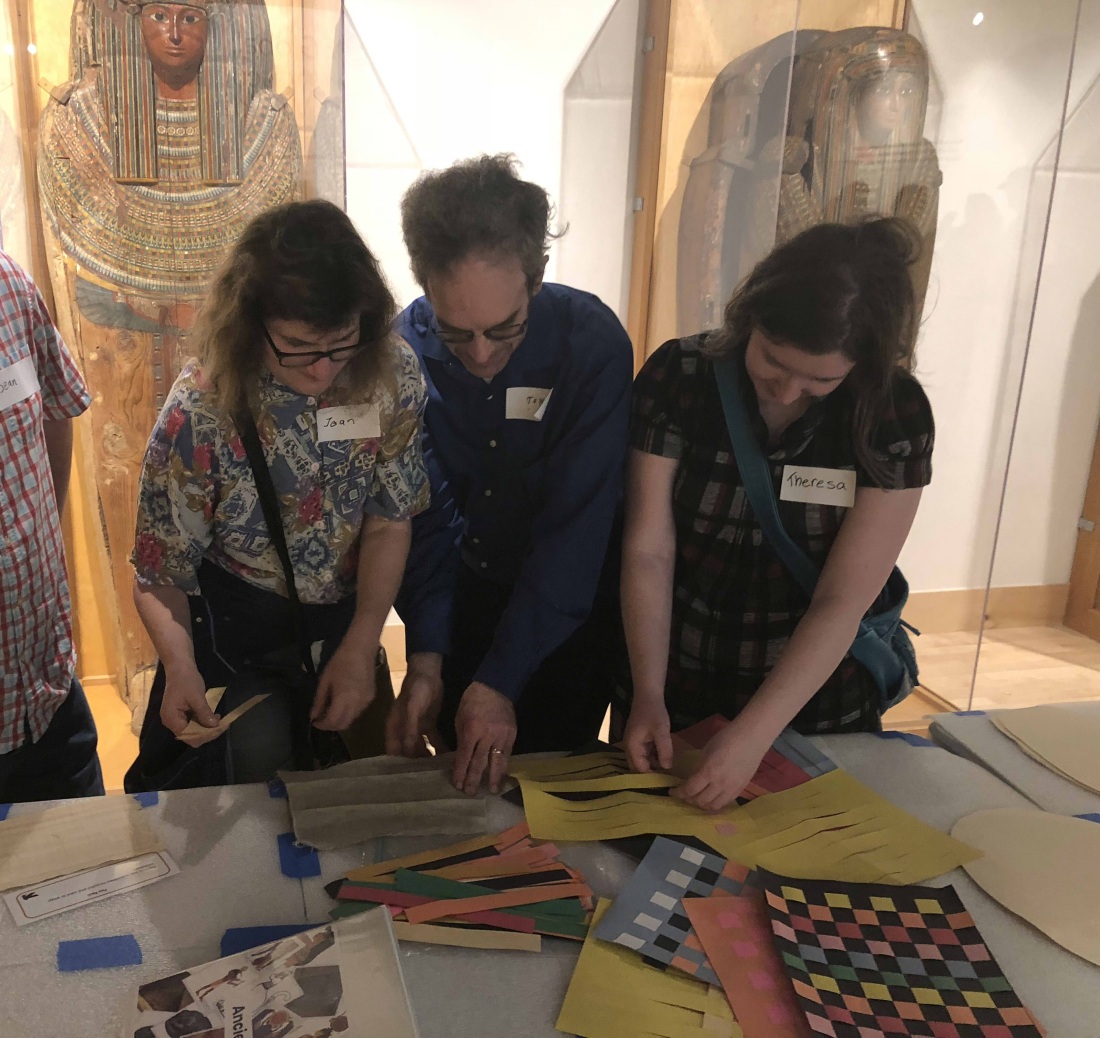
First, volunteers were available to help answer questions and to put descriptions in more child-friendly terms. Some children could not read yet, so auditory tours were key to their understanding. The second, and possibly more effective way to appeal to children, was through tactile enrichment. Touch is an incredibly important sense for people, and in children it responds to at least two important neural pathways; a sensory pathway that helps with forming information and a social connection that helps create bonds and emotions related to the touch. By touching the bark-cloth and papyrus samples, children were able to engage in the museum in ways that they would not be able to with protected, covered items. The mask making and basket weaving activities in the room accomplished this tactile opportunity while also letting them flex their creativity. Being able to draw their own masks helped them to feel connected to the ceremonial masks they saw on display. The activities were not only for children, as adults enjoyed the crafts as well. Tactile engagement is still important as you grow, and fun, low-pressure activities can remind people that museums can be a relaxing, enjoyable place. I am a firm believer that nobody is ever too old to use crayons and construction paper.

It was fun to look out at the myriad of guests, from grandparents highly educated in history and literature, to toddlers still clinging onto their parents to not fall over, to begrudging high school students who complained until they saw a particularly stunning ocarina. One child gleefully bounced back and forth between a coloring station and several animal statues while their parent attempted to explain the significance of papyrus to them. While I can’t be certain that she understood the nuances of making cloth from plants, I am sure that the joy she felt during that speech will remain with her as she grows, encouraging her to keep learning and exploring. People like her are the reason it is important for museums to be welcoming to all age brackets, not just one target audience. It can be easy to focus entirely on college age students when the building is located in a university environment, just as it can be easy to focus entirely on one generation in other, non-university museums. But taking this tactic alienates many possible guests who could benefit from everything inside the museum. Family days give people the chance to feel welcome regardless of age or any crying babies they may need to carry with them. When they focus on all ages, museums can truly be a place for the entire community to come together in a united love of learning -or just a love of coloring with crayons.
-Theresa Coffey, Museum Studies graduate student
 Global Museum SFSU